
The rupee on Tuesday recovered from its all-time intra day low of 77.79 to close higher by 7 paise on a stellar rally in domestic stock markets. After opening lower at 77.67, the local unit plunged further to its all-time intra-day low of 77.79 due to a spike in crude oil prices and disappointing macroeconomic data. However, a strong rally in domestic equities helped the rupee rebound and close at 77.48 (provisional), showing net gains of 7 paise over the last close of 77.55. The forex market was closed on Monday on account of Buddha Purnima.

The disbursement of the second tranche comes on a day when the International Monetary Fund is holding virtual discussions on Pakistan's upcoming budget, as the visit of its mission to Islamabad was delayed due to security concerns in the region.
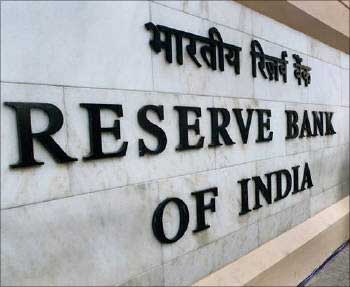
In policy review meet in June, RBI Governor Raghuram Rajan kept interest rates intact.

The country's largest private sector lender ICICI Bank on Tuesday said that it expects the Reserve Bank to continue with calibrated approach to check inflation at its upcoming September 16 monetary policy review.

Foreign portfolio investors' (FPIs') net investments in the domestic debt market surged in December, marking a 77-month high, that is, since July 2017. According to market participants, this significant uptick in FPI inflows can be attributed to the post-domestic policy outcome and the US Federal Reserve's dovish stance at the December policy. FPI inflows into debt stood at Rs 18,393 crore in December against Rs 14,106 crore in November, according to data on the National Securities Depository Limited.

This call comes even as both RBI as well as the government are fighting high inflation, driven by a massive jump in vegetable prices since mid-December with unseasonal rain affecting crops.

Citing the sharp rise in food prices, economists at a foreign bank have forecast a steeply higher retail inflation print for July, pegging it at 6.7 per cent, up 190 basis points from the previous month. Deutsche Bank India economists led by chief economist Kaushik Das, in a report on Monday ahead of the monthly inflation print and the Reserve Bank's monetary policy review, said that the July consumer price-based inflation index (CPI) is likely to print at 6.7 per cent on-year as against 4.8 per cent in June. The Reserve Bank is widely believed to leave the key interest rates unchanged for the fourth time in its upcoming bi-monthly monetary policy decision on August 10.
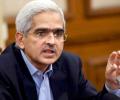
Reserve Bank of India (RBI) Governor Shaktikanta Das had stumped the market in the previous two policies - in August and in October - first with action and then with words. In August, it was the introduction of an incremental cash reserve ratio (I-CRR) to take out excess liquidity, which took the markets by surprise. In October, there was no action. Rather, what is known as "open mouth operation", Das' comment that the central bank might conduct open market operations (OMOs) by selling bonds tempered the euphoria in the bond markets after JP Morgan's inclusion of India in its Emerging Market Bond Index.
.jpg)
Industry's demand for a reduction in the repo rate, currently 8 per cent, has gained momentum after wholesale and retail inflation eased in February.

'The nominal GDP growth assumption for FY25 may be revised upwards on higher growth expectations.'

The Reserve Bank of India (RBI) is likely to take a "more dovish" stance in its upcoming monetary policy review on December 2 and may go in for a cut repo rate in February, according to a British brokerage house report.

Lenders in India, comprising banks and finance companies, anticipate robust growth in retail credit during the upcoming festival season, stretching from September to December 2023. This expectation is based on resilient demand, government initiatives, and elections in key states.

The Reserve Bank will go for a "dovish pause" at Wednesday's policy review announcement amid developments such as a rise in inflation, government maintaining the inflation target band and a likely impact on growth due to local lockdowns on rising COVID-19 infections, analysts said on Monday. Economists at American brokerage Bofa Securities said price stability, growth and financial stability will become the prime focus areas for the central bank going forward. "The RBI MPC (Monetary Policy Committee) should deliver another dovish pause on Wednesday," it said. The policy announcement, the first for the fiscal, will come days after the government maintained the RBI's target to ensure inflation to be within 2-6 per cent band for five more years.

On one hand, Operation Greens should help to smoothen volatility in the prices of vegetables, whereas the proposal to enhance and extend minimum support prices to augment farmer incomes, may emerge as an inflation risk.

This is contrary to the expectations of a majority of analysts predicting for another hike given the rise in inflation lately, including domestic ratings agency Icra

Jaitley said inflation has been under control for long and is likely to remain so on the back of good monsoon and unlikely spike in oil prices.

The Nikkei India Manufacturing Purchasing Managers' Index (PMI) stood at 47.9 in July, down from 50.9 in June, its lowest mark since February 2009, and highlighted the first deterioration in business conditions in 2017 so far.

The main reason was that CPI inflation would likely remain below 4 per cent till July.

RBI will now increasingly shift focus to domestic parameters

In the Union Budget for Financial Year 2023-24 (FY24), Finance Minister Nirmala Sitharaman had held forth on the need for better governance and investor protection in the banking sector. She had proposed certain amendments to the Reserve Bank of India Act (RBI Act), 1934; the Banking Regulation Act (BR Act), 1949; and the Banking Companies (Acquisition and Transfer of Undertakings) Act, 1970.
The American brokerage firm said it expects the rate cut to happen only in December if the monsoons normalise to cool down inflation or early 2015 in case prices rise prolongs.

Broader markets are outperforming the benchmark indices- BSE Midcap and Smallcap indices are up 0.8%-1%.

Higher prices of onion and other vegetables and fruits pushed up inflation to 6.46 per cent in September.
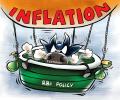
With pricing power of producers unlikely to strengthen and commodities ex-crude oil likely to remain sluggish in the immediate term, the core-WPI inflation may remain sub-zero in the rest of this calendar year.

Analysts expect the central bank to remain watchful of inflation.

As long as inflation does not decline to a significant level, the Reserve Bank of India would continue its tight monetary stance.

Indian benchmark indices may witness bouts of volatility this week as traders roll over positions in the derivative segment on expiry of near-month contracts, say experts.

Inflation based on the Wholesale Price Index cooled to a 5-year low of 1.77 per cent in October driven by softening prices of fuel and food items.

Common use products like hair oil, soaps and toothpaste will be charged with a single national sales tax or GST of 18 per cent instead of present 22-24 per cent
Reserve Bank Governor Raghuram Rajan is widely expected to hold the key rates citing high inflation at the fourth bi-monthly monetary policy announcement on Tuesday, even though the pro-growth lobby has been wishing for a rate cut.

The Reserve Bank of India on Tuesday hinted at another round of monetary policy tightening at its upcoming review meet on November 2, with Deputy Governor Subir Gokarn asserting that it is a challenge to keep inflation in check.

The markets will be eyeing the amendments.

The repo rate could be reduced by 50 bps in the current year.
The Reserve Bank of India is unlikely to ease the requirement for banks to keep cash with the central bank through a cut in CRR rate in its mid-term monetary review on October 24 even though the banking system is facing liquidity problem, Finance Ministry sources said on Wednesday.

The RBI governor-designate may be economical with spoken words, but is known for his sharp and critical writings

The July-September quarter GDP numbers are due on November 30.
By no means do economists see the Reserve Bank of India stop at just a 25-bp cut. Some of the economists such as Soumyakanti Ghosh of State Bank of India are of the firm view that rates have room to fall by a total of 75 bps in the current financial year, starting with 25 bps in the August 7 policy.
There is a near consensus that at least a 25 basis points cut, if not 50, can be expected in the June policy.

The government may be staring at a modest slippage in fiscal deficit for 2022-23 (FY23), with the Ministry of Finance seeking parliamentary approval for additional spending through a second and final tranche of supplementary demands for grants. On Monday, as the Budget session of Parliament resumed, Finance Minister Nirmala Sitharaman sought Parliament approval for additional gross spending of Rs 2.7 trillion in FY23 (which ends on March 31). While net cash outgo is pegged at Rs 1.48 trillion, the rest will be matched by savings or enhanced receipts, the finance ministry said.

Weakness in the greenback overseas against the backdrop of sluggish US macro data outcome helped the home currency move higher
